

Tax Later, Plan Smarter
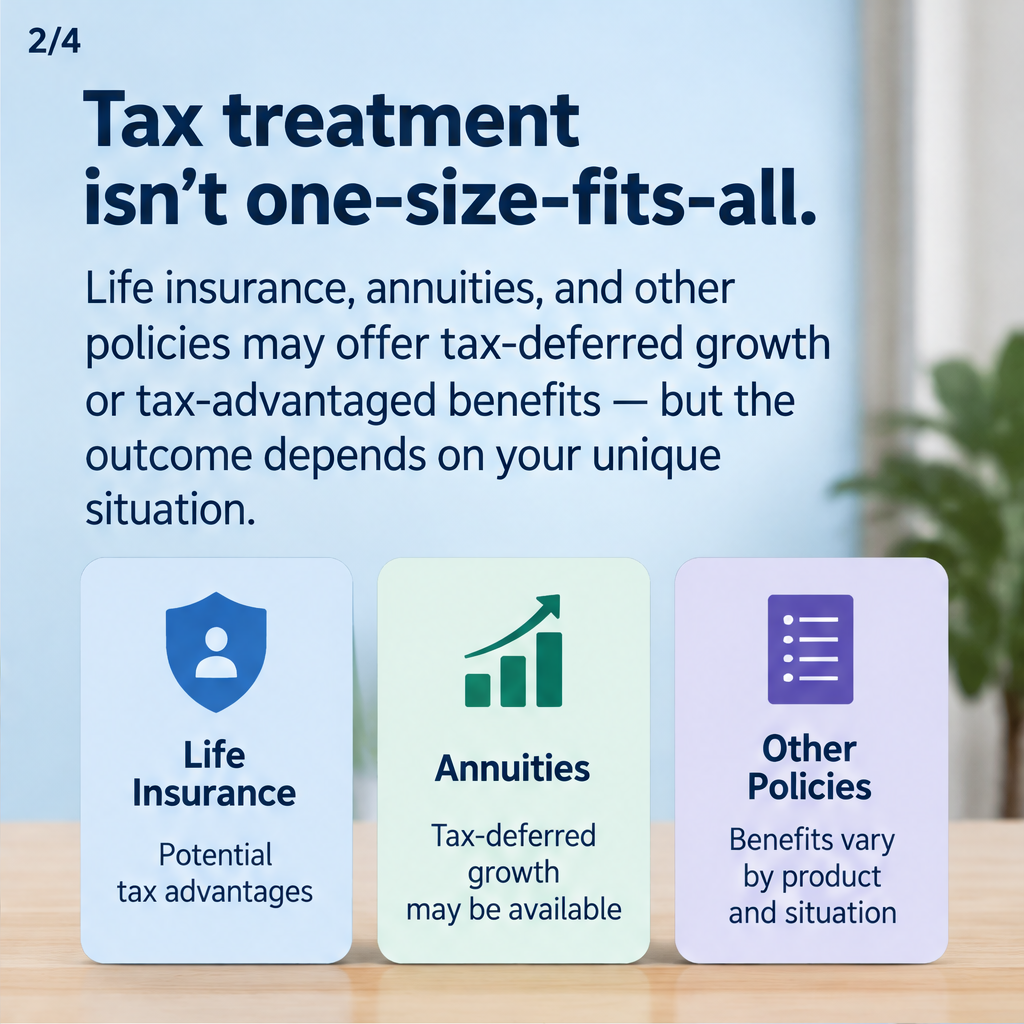
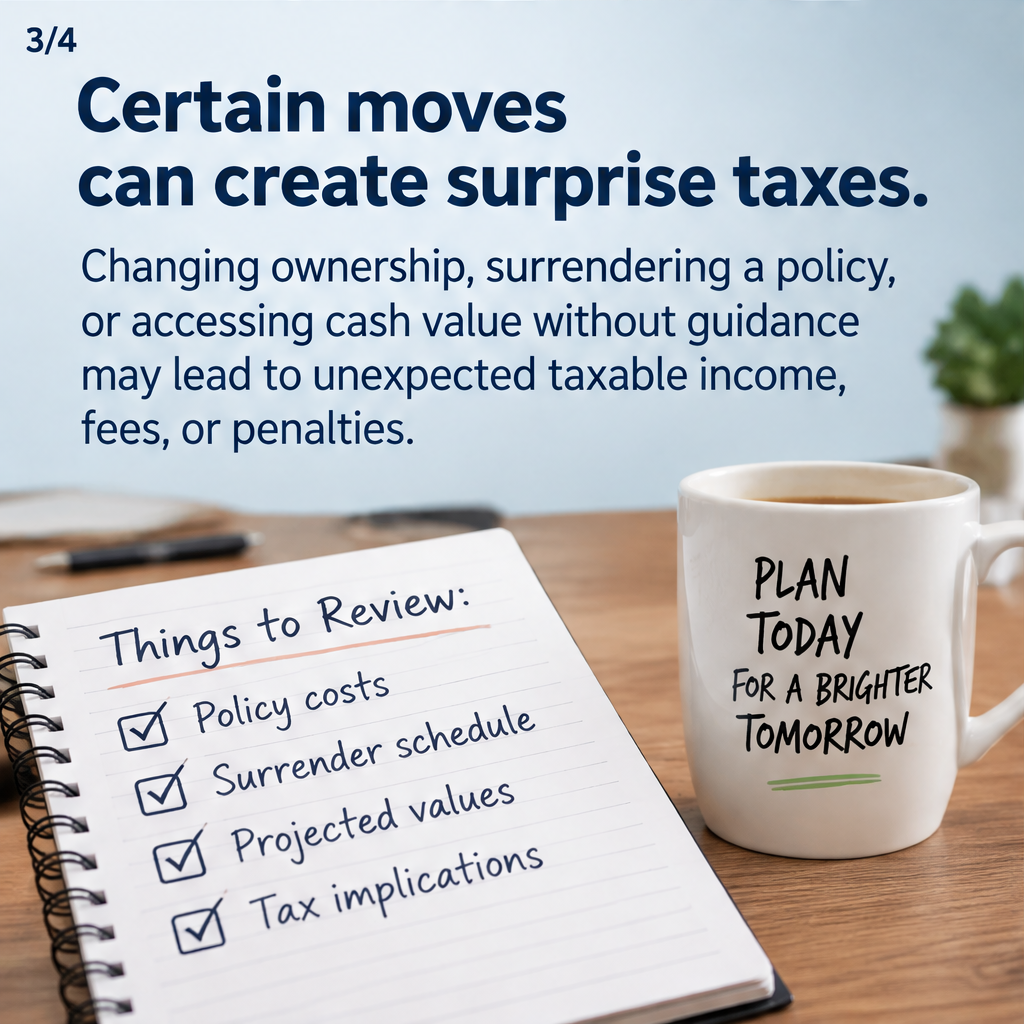
“Tax later” can sound simple, but tax treatment varies widely across insurance products and personal circumstances. Life insurance, annuities, and other policies may offer tax-deferred growth or tax-advantaged benefits, yet the outcome depends on factors such as policy structure, ownership, withdrawals, loans, and beneficiary designations. A thoughtful review starts by connecting your insurance coverage to your complete financial strategy. Consider whether your policies support your income needs, retirement goals, estate plans, and family protection objectives. Changing ownership, surrendering a policy, or accessing cash value without guidance may create unexpected taxable income, fees, or penalties. Before taking action, ask your insurance professional to explain the policy’s costs, surrender schedule, projected values, and tax implications. A qualified tax adviser can also help you understand how current IRS rules apply to your situation. With coordinated advice, you can pursue tax-aware decisions while keeping protection and long-term goals at the center.