Roth IRA: Protect Your Future, Grow Your Freedom
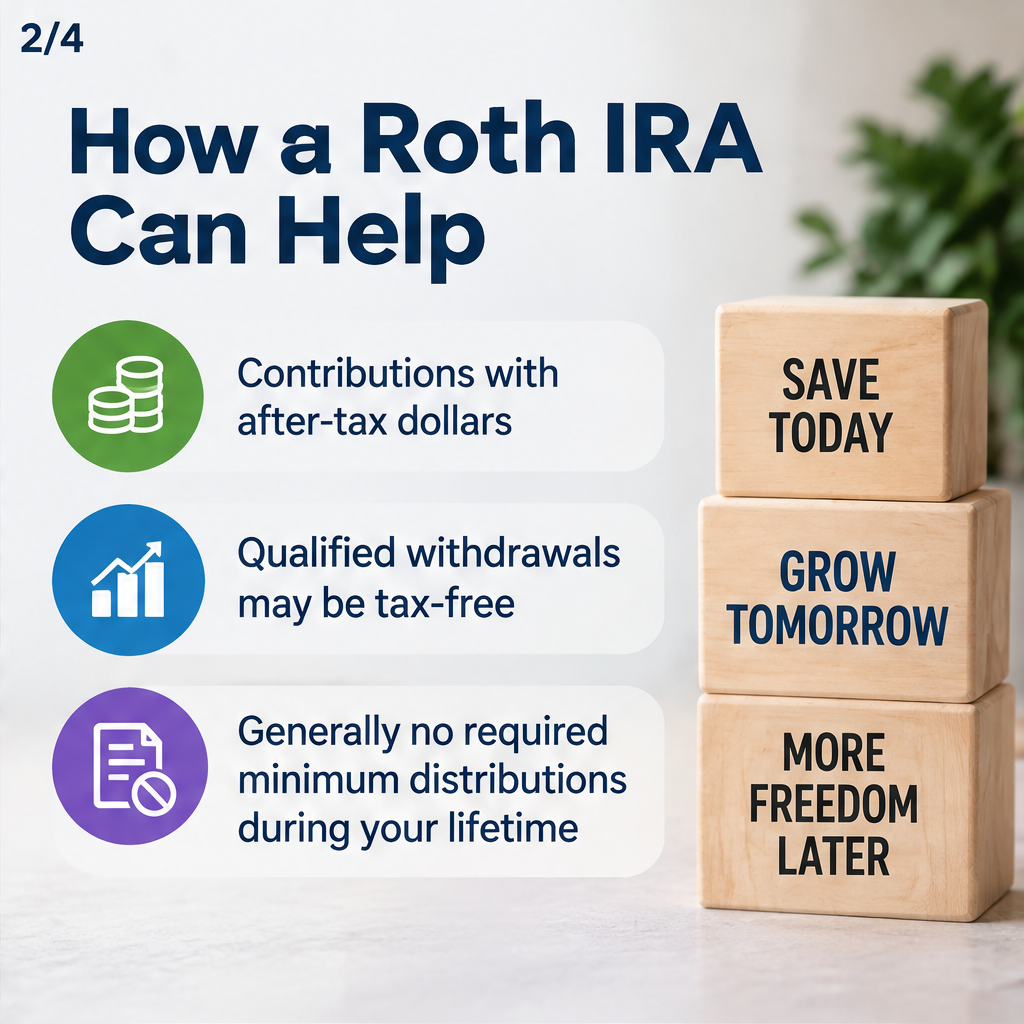
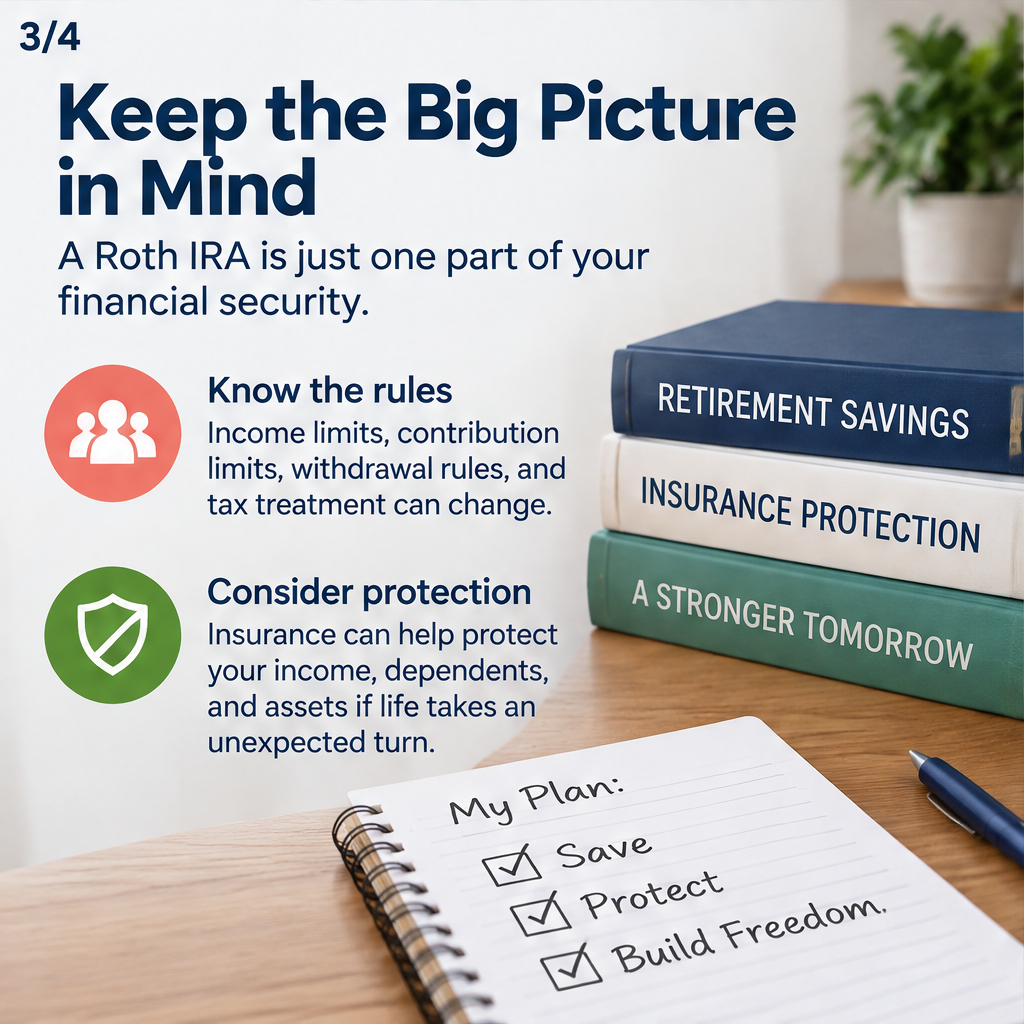
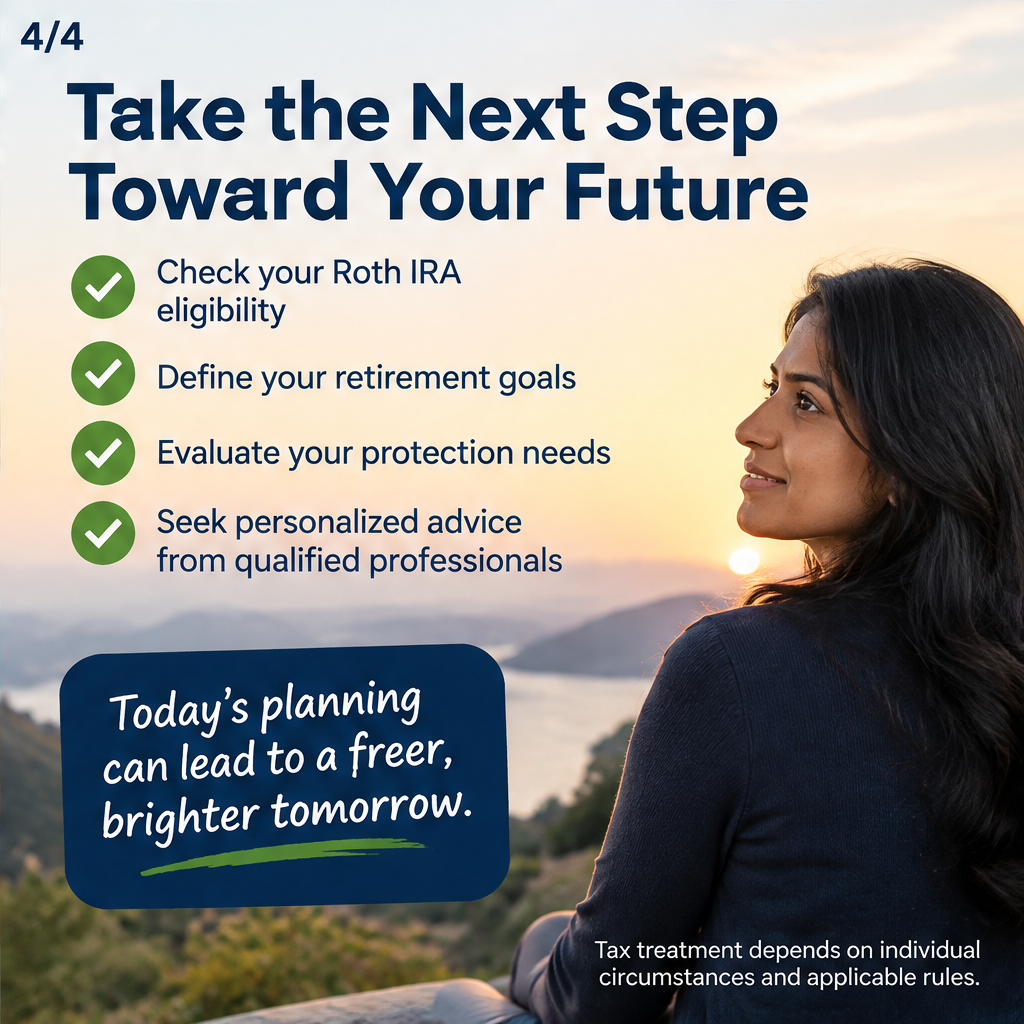
A Roth IRA can be a powerful part of a long-term retirement strategy. Contributions are made with after-tax dollars, and qualified withdrawals may be tax-free, helping provide flexibility as your financial needs change. Unlike traditional retirement accounts, Roth IRAs generally do not require minimum distributions during the owner’s lifetime. Eligibility and contribution rules matter. Income limits, annual contribution limits, withdrawal requirements, and tax treatment can change, so review current IRS guidance and consider consulting a qualified tax or financial professional. Avoid assuming that every withdrawal will be tax-free, especially when earnings or early distributions are involved. Retirement savings are only one piece of financial security. Insurance can help protect income, dependents, and assets if illness, disability, or unexpected events affect your plans. Coordinating retirement contributions with appropriate coverage can create a more resilient strategy. Use these steps as a starting point: check your Roth IRA eligibility, define your retirement goals, evaluate your protection needs, and seek personalized advice from licensed professionals. *Tax treatment depends on individual circumstances and applicable rules.